



Driving in Cuba 2026: Roads, Rules and Road Safety
Driving in Cuba gives you a freedom no other way of getting around offers: stopping at a lookout point in Viñales, turning off toward a beach with no name, or arriving in Trinidad whenever you like. But Cuban roads are nothing like European or North American ones, and if you get behind the wheel without knowing that, you find out at the first pothole.
The problem isn’t technical difficulty, it’s unpredictability. On the same highway, rental cars share the road with loaded trucks, horse carts, bicycles, loose cattle and people asking for a lift. And a large part of the road network is in poor condition, with little signage and almost no lighting.
This guide explains the state of the roads in 2026, the traffic rules you need to know, how police checkpoints work and what to do if there’s an accident. It doesn’t cover rental or insurance: those topics have their own guides, which we link to where relevant.
The state of Cuba’s roads in 2026
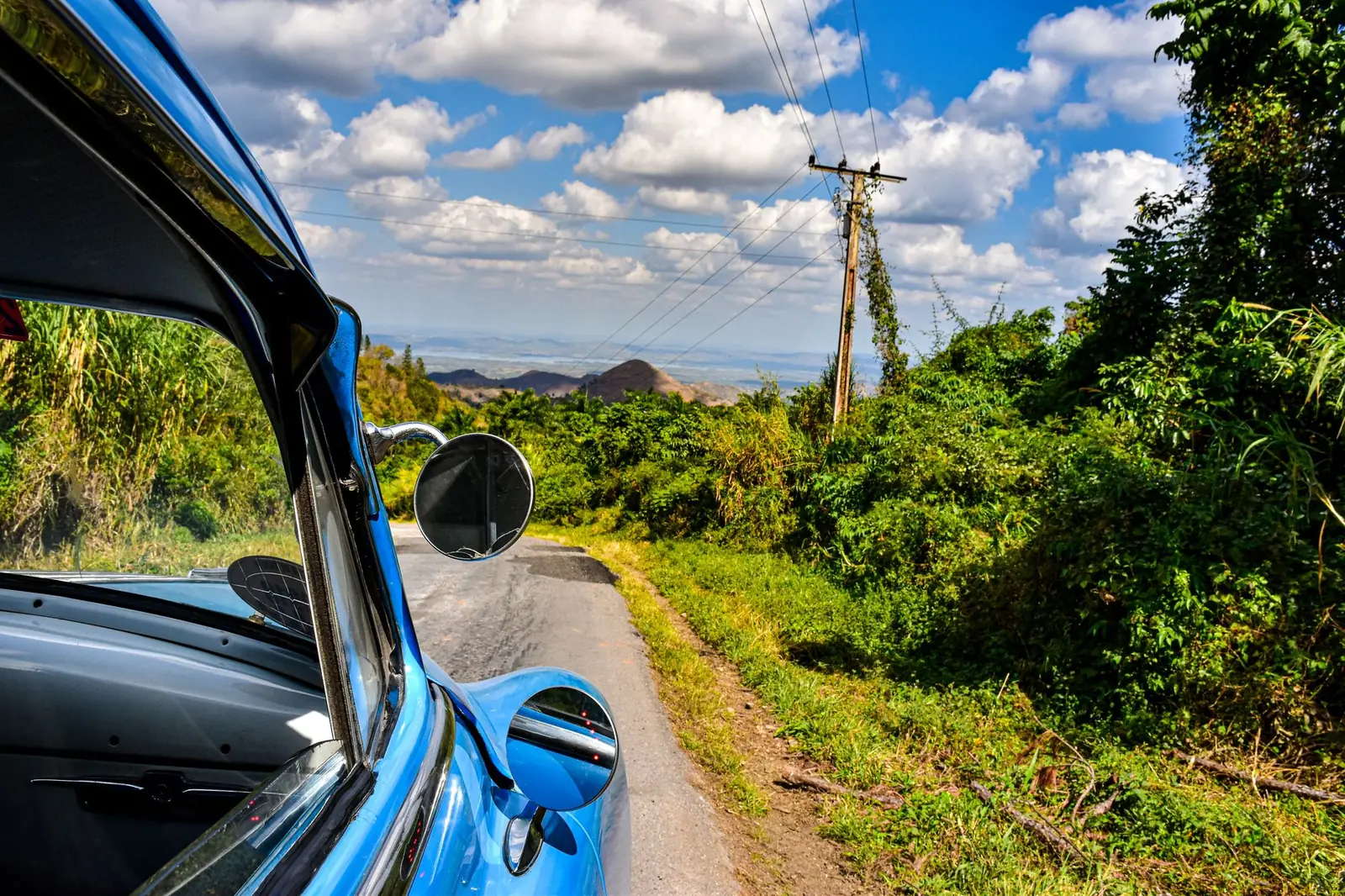
According to official data published in 2025, three out of every four kilometers of the road network are in fair or poor condition. Maintenance is running well behind schedule, and the shortage of asphalt and fuel doesn’t help.
The Autopista Nacional
The Autopista Nacional connects Havana with the center of the island and is the fastest route, but not the most comfortable one. The stretch between Havana and Sancti Spíritus is full of deep potholes that force sudden lane changes. There’s no reliable shoulder, no regular service areas, and no lighting.
The Carretera Central and the coastal circuits
The Carretera Central runs the length of the island from end to end and passes through towns, with the slow traffic that entails. The Circuito Norte and the Circuito Sur, which run along the coast, have stretches of badly deteriorated pavement. For any specific route, always allow more time than the map suggests.
The real dangers on the road
Potholes are the first thing you notice, but they’re not the only thing. These are the obstacles that cause the most scares:
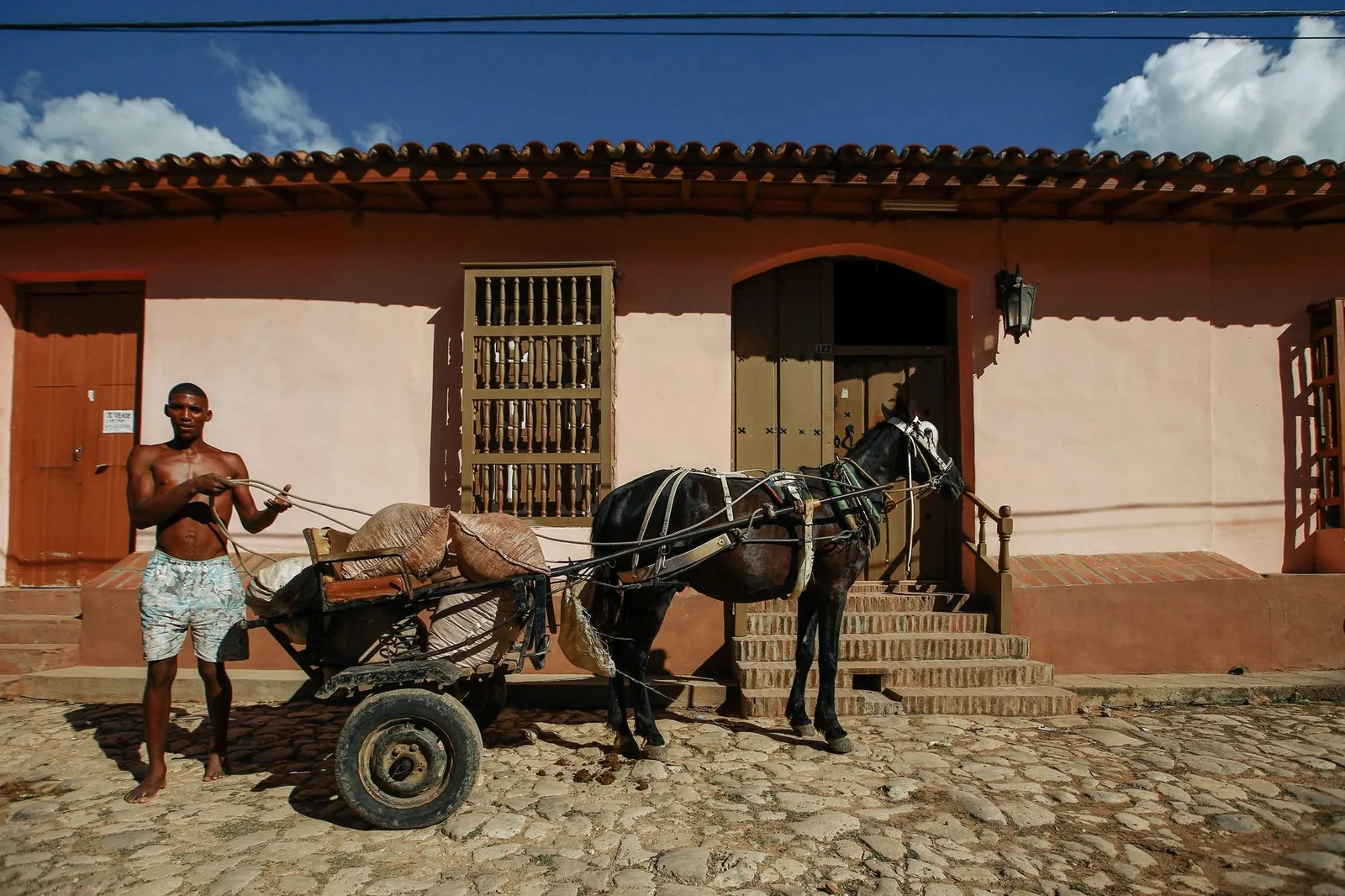
- Horse carts and bicycles: they move slowly and without lights, even on the highway.
- Loose livestock: cows and horses cross or linger on the road, especially in Camagüey, Santiago de Cuba and Mayabeque.
- People doing “botella”: this is what hitchhiking is called in Cuba, and it happens in any lane, especially at intersections.
- Railway level crossings: many have no barrier and are poorly marked.
- Broken-down vehicles: with the fuel shortage, it’s not unusual to find cars and trucks stopped on the road.
Scarce signage
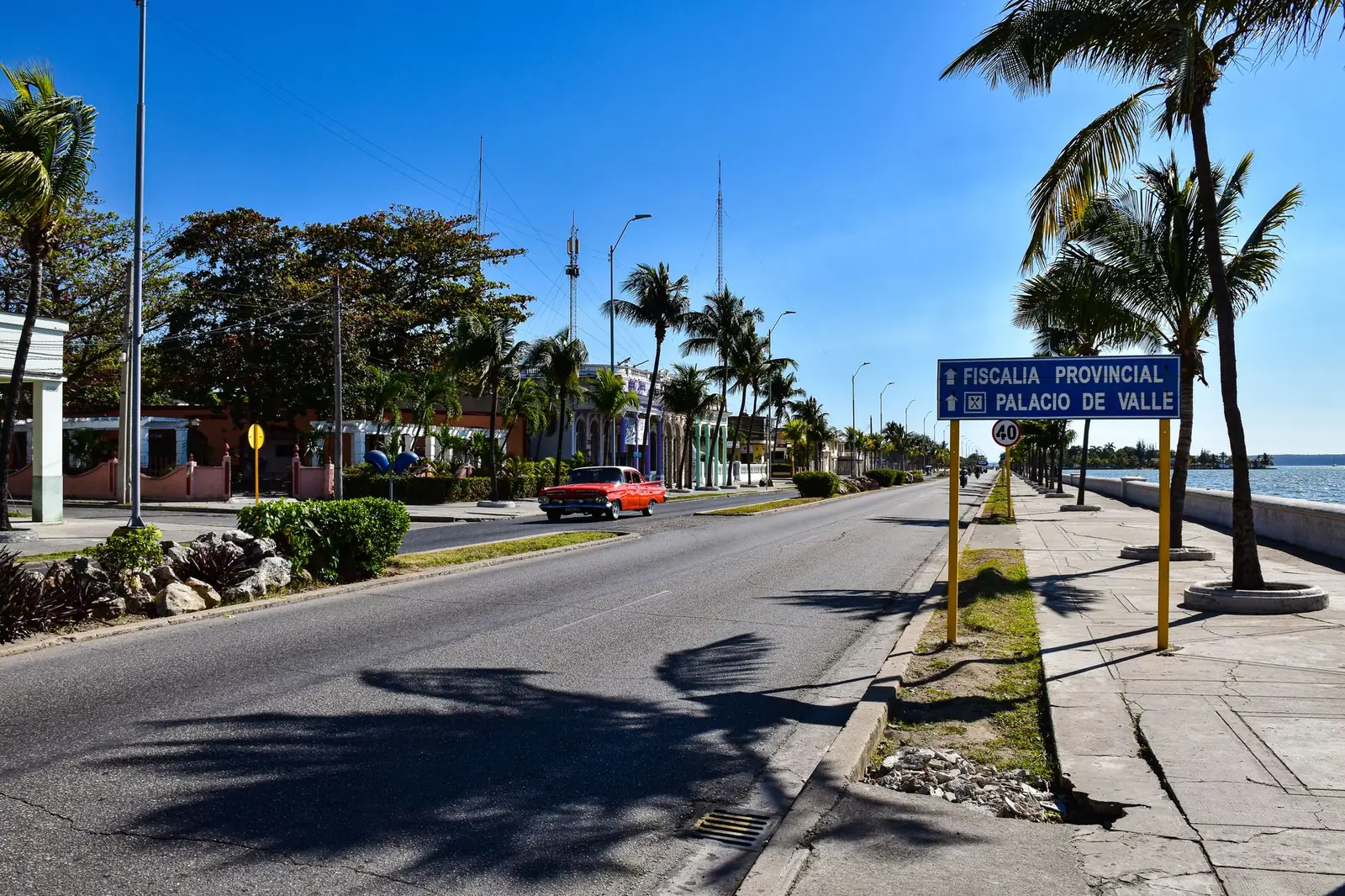
Directional signs are missing at many intersections, and the ones that exist are often worn out. It’s easy to take a wrong turn at roundabouts and highway exits. Study your route before setting out, and don’t count on finding signs when you need them.
Traffic lights with no power
During blackouts, the traffic lights in Havana and other cities go dark. Every intersection turns into a negotiation between drivers. Slow down and treat any intersection as if you didn’t have right of way.
Why you shouldn’t drive at night
This is the one piece of advice every official travel warning agrees on. Spain’s Ministry of Foreign Affairs recommends avoiding driving at night, and Canada’s travel advisory explains why: animals on the road, vehicles without lights, pedestrians on the roadway and unlit roads.
Plan each leg of the trip so you arrive before dark. If the drive is long, set out early. And if night catches you on the road, slow down considerably and pay extra attention to the shoulders.
Traffic rules you should know
Cuba regulates traffic under Law 109, the Road Safety Code. These are the rules that affect foreign drivers the most.
Driver’s license
Your home country’s license is valid for the first six months after you enter Cuba, according to Spain’s Ministry of Foreign Affairs. An international permit isn’t legally required, but some rental agencies ask for one. Check our guide on renting a car in Cuba from abroad.
Speed, alcohol and phone use
- Speed: 50 km/h in urban areas. On highways and main roads, follow whatever the signs say: published figures don’t agree between sources.
- Alcohol: zero tolerance in practice. Don’t drink anything if you’re going to drive.
- Phone: prohibited to hold and use while driving.
- Seatbelt: mandatory in vehicles that have one installed.
Police checkpoints and fines
The traffic police run fixed checkpoints at provincial borders and on main roads, plus mobile speed and breathalyzer checks. Rental cars carry tourist license plates and are easy to spot.
At a checkpoint, stop, have your passport, license and rental contract ready, and stay calm. With rental cars, the fine is usually noted on the contract and charged when you return the vehicle. Always ask for it in writing.
What to do if you have an accident
In Cuba, an accident with injuries or deaths is treated as a criminal matter. While the case remains open, the court can bar the driver from leaving the country, and according to Canada’s travel advisory the penalty can reach ten years in prison if you’re found responsible.
- Don’t leave the scene or move the vehicle.
- Call the police and the rental agency.
- Notify your consulate if anyone is injured.
What the insurance covers and how to handle things with the agency are explained in our own guide on rental car insurance.
How to find your way without mobile data
Data coverage is weak or nonexistent along many rural stretches, and blackouts make it worse. Download an offline map before you set out: Maps.me, OsmAnd and Organic Maps all work in Cuba with voice navigation and no data connection. Google Maps lets you download areas, but its coverage of Cuba is thinner.
Safety tips behind the wheel
- Don’t pick up hitchhikers: the Canadian government specifically advises against it.
- Be wary of staged flat tires: Spain’s Ministry of Foreign Affairs warns of thefts from tourists after a fake warning about a punctured tire.
- Don’t leave anything visible inside the car, not even for a short while.
- Carry cash, water and a charged phone battery on every leg of the trip. Work out the amount with our guide on how much cash to bring to Cuba.
- Park in guarded spots, especially at night.
When it’s better not to drive
If the trip is short, you’re only moving between two or three cities, or you’d rather not deal with the road, a local driver is often the more sensible choice. A private taxi in Cuba booked in advance takes you door to door, and the driver already knows every pothole along the way. It’s the usual choice on routes like the Havana to Trinidad taxi.
Frequently asked questions
Is it safe to drive in Cuba?
Yes, during the day and with caution. The biggest risk is the state of the roads and unpredictable traffic, not crime. Avoid driving at night.
Is my driver’s license valid in Cuba?
Yes, for the first six months after you enter the country. An international permit isn’t required, although some rental agencies ask for one.
What’s the alcohol limit for driving in Cuba?
In practice, zero tolerance. The sensible approach is not to drink anything if you’re going to drive.
Does Google Maps work in Cuba?
It works with downloaded maps, but without mobile data along many stretches. Maps.me, OsmAnd and Organic Maps are more complete for Cuba.
What happens if I have an accident with injuries in Cuba?
A criminal case is opened, and the court can prevent you from leaving the country while it remains open. Don’t leave the scene, and notify the police and your consulate.
How are traffic fines paid with a rental car?
They’re usually noted on the rental contract and charged when you return the car. Always ask for it in writing.
In summary
Driving in Cuba is perfectly possible if you accept what the roads are like: potholes, little signage, mixed traffic and nights without light. Set out early, bring a downloaded map, respect the zero-tolerance rule on alcohol, and don’t drive at night.
If you’d rather not drive, at EnCuba.net we arrange private transfers between cities with local drivers, and we also help you rent a car in Havana if you want to explore the island on your own.
