



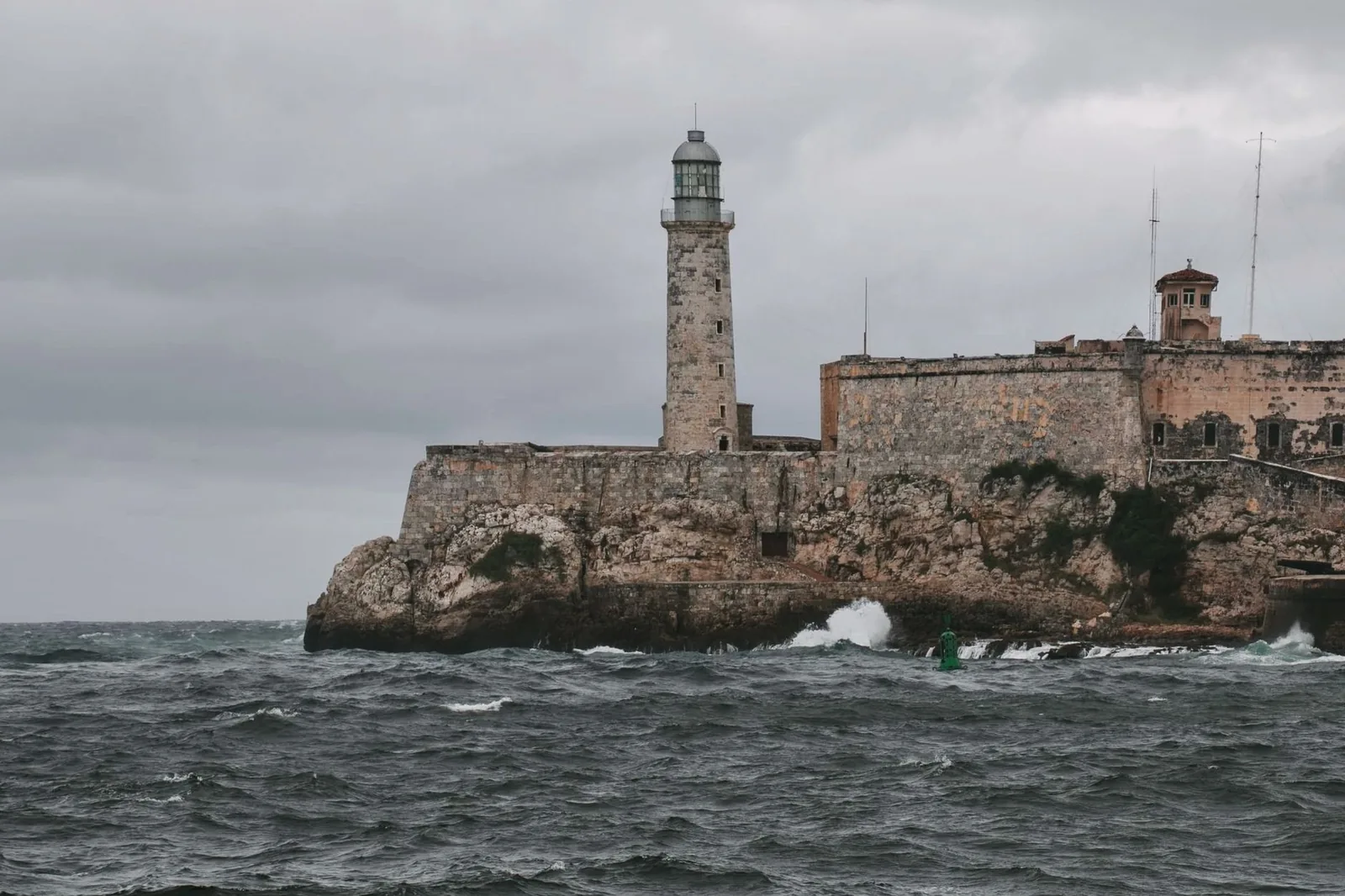
Weather in Cuba by Month: Hurricane Season Guide
Choosing the month for a trip to Cuba usually comes down to one question: when is the weather good, and when is there a risk of a hurricane? The short answer is that the year splits into a dry season from November to April and a wet season from May to October, and that the Atlantic’s official hurricane season runs from June 1 to November 30, peaking between mid-August and mid-October. But there are many nuances in between: the heat and mugginess, rain that almost always falls in short showers, the differences between the west and the east, and the fact that November can still bring a cyclone.
This guide gathers the weather in Cuba month by month using climate averages from meteorological sources (where sources disagree, we give you ranges), explains how cyclone warnings work in Cuba and what to do if one coincides with your stay. It also looks back at Hurricane Melissa in October 2025, and at how summer heat combines with the 2026 blackouts.
Cuba’s two seasons: dry and wet
Cuba has a tropical climate with two seasons, not four. Specialists at the Institute of Meteorology (INSMET) speak of a less rainy period from November to April and a rainy period from May to October. In that second half of the year, roughly 74% of the annual rainfall falls, according to INSMET specialists quoted in the Cuban press.
Dry season (November to April)
This is the most comfortable time: less rain, less mugginess and cooler nights. In the west, from Havana to Pinar del Río, cold fronts come through now and then, northern systems that lower the temperature for a few days. An INSMET study describes them as regular winter visitors, which coincides with the less rainy period.
Wet season (May to October)
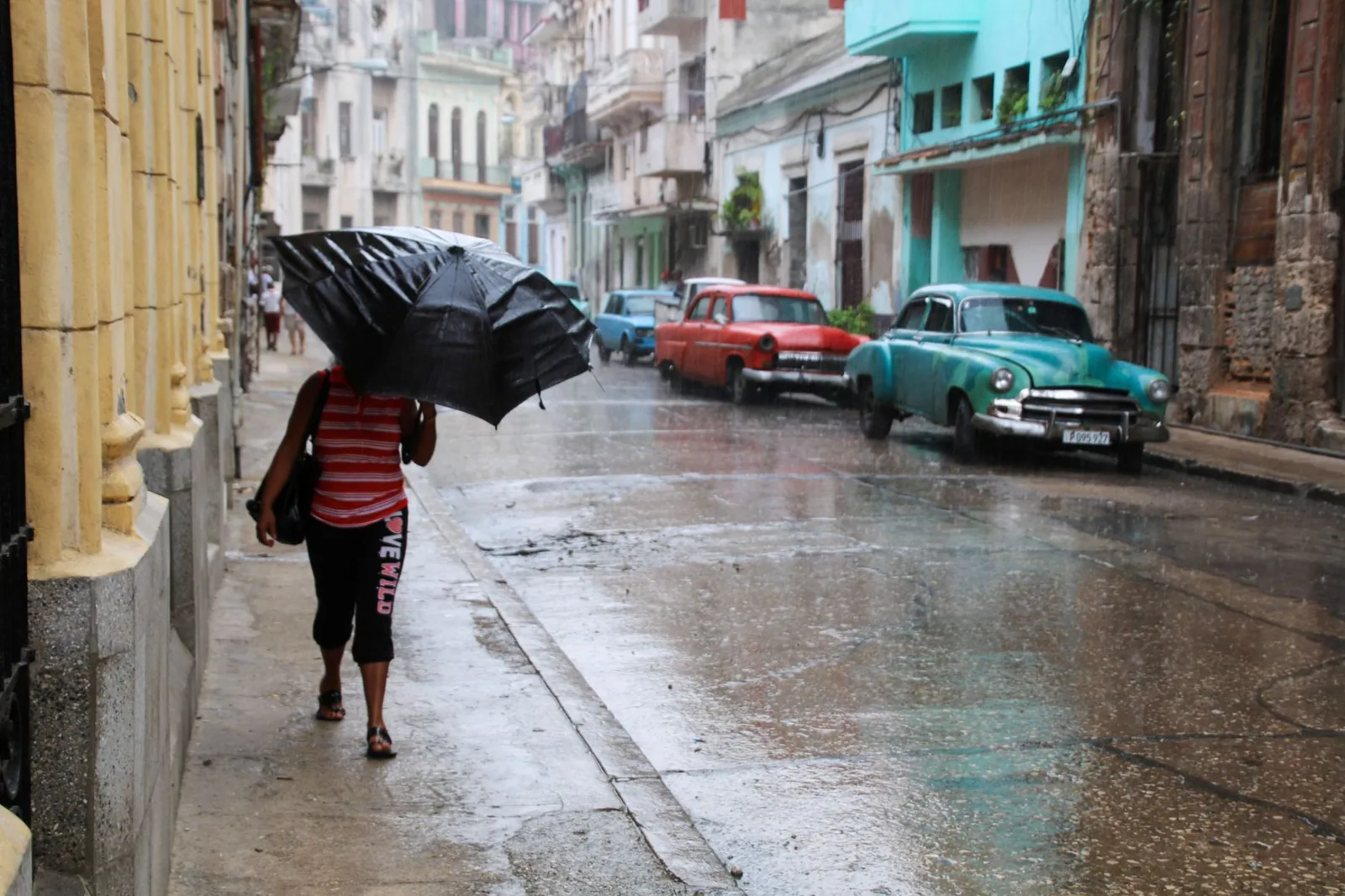
More heat, more humidity and frequent rain: between 6 and 14 rainy days a month depending on the data series. The climate sources we consulted describe short downpours followed by sunshine, so it does not usually rain all day.
Weather in Cuba month by month
The table uses Havana as its reference. Temperatures, rain and sea are ranges that come from comparing three series: the 1961-1990 normal for the Casablanca station (INSMET, published by the WMO), the Havana climate table that Wikipedia compiles from INSMET and WMO data, and WeatherSpark’s 1980-2016 reanalysis. They differ in period and method, so do not take any figure as exact: they are useful for comparing months.
| Month | High / low (°C) | Rain (mm) | Sea (°C) | Mugginess | Crowds | Cyclones |
|---|---|---|---|---|---|---|
| January | 26 / 18-19 | 35-65 | 23-26 | Low | High | Off-season |
| February | 26-27 / 18-19 | 35-70 | 23-26 | Low | High | Off-season |
| March | 27-28 / 19-20 | 35-55 | 24-26 | Low | High | Off-season |
| April | 28-30 / 21-22 | 35-60 | 26 | Medium | Medium (Holy Week) | Off-season |
| May | 30-31 / 22-23 | 65-120 | 27 | High | Low | Off-season |
| June | 30-32 / 23-24 | 95-180 | 28 | High | Low | Low (season open) |
| July | 31-32 / 24 | 65-125 | 28-29 | High | Medium (holidays) | Low |
| August | 32 / 24 | 80-145 | 28-29 | High | Medium (holidays) | Rising |
| September | 31-32 / 24 | 95-175 | 28-29 | High | Low | Peak |
| October | 29-30 / 23 | 80-180 | 27-28 | High | Low | High |
| November | 28-29 / 21-22 | 45-90 | 26-27 | Medium | Medium | End of season |
| December | 26-27 / 19-20 | 30-60 | 24-27 | Low | High | Off-season |
Two clarifications about the last columns. Mugginess sums up the “sticky” days that WeatherSpark calculates: about 13 to 17 a month from January to March and between 28 and 31 from May to September. Crowds is only a guide and comes from travel guides (Lonely Planet, Worldpackers), which place high season in the northern-hemisphere winter and a rebound in July and August. With the current crisis and the drop in visitors, do not take it as a promise of full or empty hotels. The Cyclones column reflects the seasonality published by the U.S. National Hurricane Center (NHC).
Regional differences: west, east, coasts and mountains
West: Havana, Pinar del Río, Viñales
This is the area covered by the table above. Winters are mild with the occasional cool night from cold fronts, summers are hot, and it is the area most exposed to cyclones in June, according to INSMET, because the western Caribbean (the Gulf of Honduras) is one of the main formation areas early in the season.
East: Santiago de Cuba, Baracoa and Guantánamo
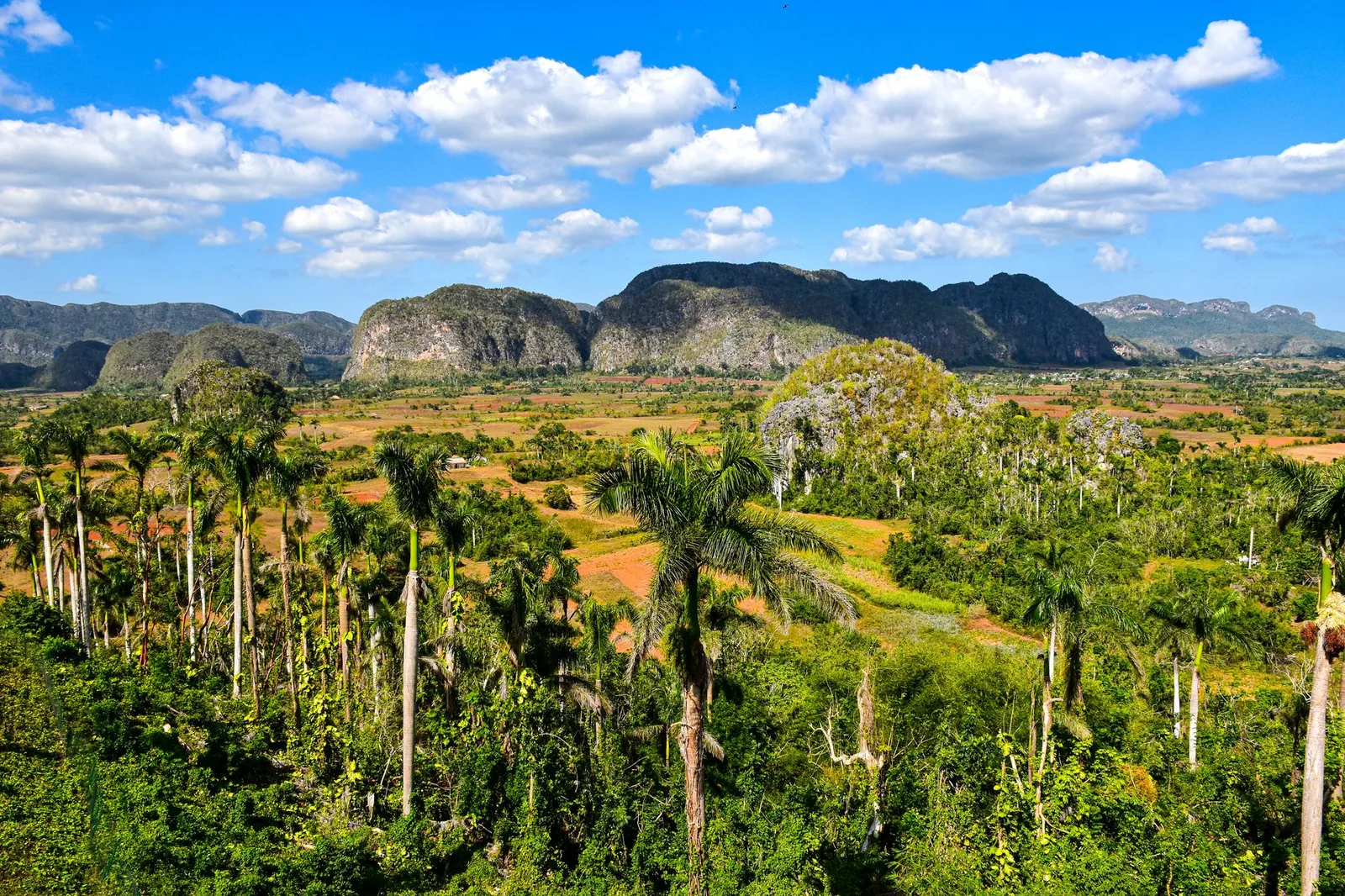
The east is generally somewhat warmer in winter than Havana, according to several climate guides. The Sierra Maestra creates sharp contrasts: the windward slopes (Baracoa, for example) receive very heavy orographic rainfall, while the Guantánamo Bay area, in the mountains’ rain shadow, has a semi-arid climate. Within Santiago de Cuba province, average annual rainfall is around 1,375 mm, but it drops to about 800 mm in the basin of the city itself, according to the Cuban tourism portal.
North coast, south coast and mountains
We have not found a comparison with figures from official sources between the north coast and the south coast, so we do not invent one: the documented differences are those of the east (above) and those of altitude. In the mountains, altitude rules: according to the same tourism source, the average annual temperature in the Sierra Maestra and the Sierra Cristal is around 14 to 16 °C (57-60 °F), compared with about 24 to 26 °C on the coastal plains.
Hurricane season: dates and figures
The NHC sets the Atlantic hurricane season from June 1 to November 30. The climatological peak falls around September 10 and most activity occurs between mid-August and mid-October. An average season (1991-2020) has 14 named storms, 7 hurricanes and 3 major hurricanes (category 3 or higher).
For Cuba, INSMET calculates that the climatological probability of at least one hurricane affecting the island in a season is 35%.
What has happened in 2025 and 2026
Hurricane Melissa made landfall in eastern Cuba on October 29, 2025, as a category 3 hurricane, near Chivirico (Santiago de Cuba province), according to the WMO’s preliminary report. It crossed the Sierra Maestra, weakened and exited about nine hours later through Holguín. It dropped between 200 and 400 mm of rain over large areas of the eastern provinces, and almost 700,000 people were evacuated before its arrival. The WMO recorded no deaths in Cuba in that report. The Cuban authorities, quoted by the EFE agency, counted 116,100 damaged homes, more than 93,000 of them in Santiago de Cuba.
It was not the only recent case. Hurricane Rafael made landfall as a category 3 on November 6, 2024, in Artemisa, in the west, with a nationwide blackout and the Havana and Varadero airports temporarily closed. November is still within the season.
In 2026 the picture is different. In May, INSMET forecast a season less active than average (11 tropical cyclones, 5 hurricanes and 2 major ones), with a 40% probability of a hurricane affecting Cuba and 75% for a tropical storm. NOAA, in its August 6 update, gave a 75% probability of a below-normal season, because of a strong El Niño episode. As far as we have been able to verify as of October 9, the season’s first hurricane formed on October 8 in the Gulf of Mexico, and we have not found any hurricane that has affected Cuba this year. Even so, the season remains open until November 30, and a single system is enough to ruin a trip.
What to do if there is a cyclone during your trip
The most important thing is not to improvise and to follow the official warnings. In Cuba they are issued by INSMET and the Civil Defense, which can also order the evacuation of entire areas. Spain (MAEC) asks travelers to follow its recommendations strictly and refers them to the NHC; Canada reminds travelers that even a small storm can quickly become a hurricane, and advises being ready to change your trip at short notice.
The Civil Defense phases
Cuba’s Civil Defense activates phases province by province, not for the whole country at once. According to the Cuban press, they can be summarized as follows:
- Informative: the first stage, with monitoring of the system, clearing of drains and tree pruning.
- Alert: when the cyclone is expected to be present within the next 48 hours.
- Alarm: about 24 hours before impact, with the most concrete measures, including evacuations.
- Recovery: after the cyclone has passed, to assist those affected and restore services.
Some sources count four phases and others add an emergency phase: the alarm phase is the one that requires immediate action.
At your casa particular
Tell your host on the first day of the alert: they know the neighborhood and its routes best. We have not been able to confirm a specific official protocol for tourists staying in casas particulares (licensed private homes that rent rooms to visitors), so we do not assume one: ask your host and follow the instructions of the local authorities. If you need help raising the question, write to us and we will ask the host for you.
Transport and bookings
During Melissa, classes, buses, intercity trains and flights to and from Santiago de Cuba and Holguín were suspended. If the system approaches your route, bring your transfer forward or postpone it before transport stops; our guide to rental car or taxi between cities will help you weigh your options. And leave some margin in your bookings: Canada warns that international airlines may cut flights at short notice (in February 2026 Air Canada, WestJet and Air Transat suspended their routes to Cuba because of the lack of jet fuel), and Spain points to an almost total shortage of gasoline and diesel. Before you buy travel insurance, check what it covers if the trip is canceled or interrupted by a weather event.
Summer heat and blackouts
From July to September, daytime highs in Havana are around 31 to 32 °C and average lows around 24 °C. With the mugginess of those months, sleeping without a fan or air conditioning becomes an uphill struggle.
The problem is that in 2026 power cuts are frequent. Canada speaks of long, unpredictable daily power cuts, with national blackouts that can exceed 24 hours, and Spain describes frequent power and water cuts across the country. An AP report from August 4, 2026, described Havana residents sleeping on the Malecón to escape the heat during a blackout.
If you travel between June and September, a home with backup power (a generator, an inverter or panels with batteries) makes the difference between a bearable summer and a sleepless night. We explain it in casas particulares with generators in Cuba. And for clothing and essentials for each season, see what to pack for Cuba.
So, what is the best time to go?
- Best weather: December to March, with less rain, less mugginess and outside the hurricane season. It is also when demand is highest.
- Good balance: April and November, with weather that is still pleasant. November still carries some cyclone risk.
- Hotter and wetter, but calm: May and June, with hurricane risk still low.
- Highest risk: August to October, peaking in September. If you travel then, book flexibly and follow the warnings.
If what you are after is the sea, the best month changes depending on the destination: there is a separate summary in where are the best beaches in Cuba.
Frequently asked questions
What is the best time to travel to Cuba?
December to March is usually the time with the best weather: less rain, less mugginess and outside the hurricane season. April and November are a good alternative. Between June and October it is hotter and rains more.
When is the hurricane season in Cuba?
Officially, from June 1 to November 30. The peak is around September 10 and most activity occurs between mid-August and mid-October, according to the U.S. National Hurricane Center.
Which month rains the most in Cuba?
The sources do not agree on a single month: in Havana, June, September and October share the maximums, with about 95 to 180 mm. The wet season (May to October) accounts for roughly 74% of annual rainfall.
What should I do if there is a hurricane during my trip to Cuba?
Follow the warnings from INSMET and the Civil Defense, tell your host, comply with any evacuation order and bring your transfer forward before transport is suspended. Leave some margin in your bookings and check your travel insurance.
Is it very hot in Cuba in summer?
Yes: from July to September, daytime highs in Havana are around 31 to 32 °C, with nights of about 24 °C and a lot of mugginess. In 2026, frequent blackouts also make it harder to cool off at home.
Were there hurricanes in Cuba in 2025 and 2026?
In 2025, Melissa hit eastern Cuba on October 29 as a category 3. In 2026, as of October 9 we have not found any hurricane that has affected Cuba, but the season remains open until November 30.
Pick your date and book with some margin
The weather in Cuba allows you to travel almost all year, but the month you choose changes the heat, the rain, the cyclone risk and what matters to have at home. If you already have dates, see our accommodation in Cuba or write to us: we will help you choose a casa particular for the season and, if you have doubts about backup power or water, we will ask the host for you.
